
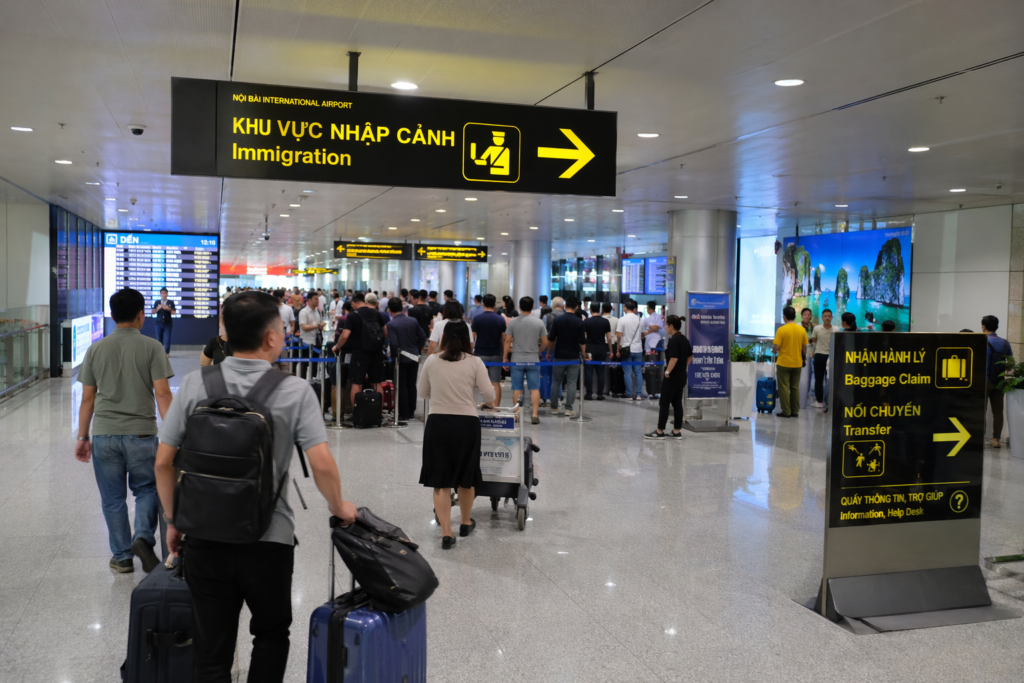
Vietnam Airport Arrival Guide: SGN vs HAN vs DAD, SIM, Taxi, Customs
For most travelers, arriving in Vietnam is not difficult. The confusing part is the first hour after landing, when you are tired, need internet quickly, want to clear the airport smoothly, and are not always sure what to do first.
That is why this guide focuses on the questions travelers actually ask after booking a flight to Vietnam. Which airport is closer to the city? Which one feels more crowded? How long does it usually take to get out? Should you buy a SIM card at the airport or prepare eSIM before flying? And what changes if you land late at night?
This pillar guide compares the three main international arrival airports in Vietnam: Tan Son Nhat Airport (SGN) in Ho Chi Minh City, Noi Bai Airport (HAN) in Hanoi, and Da Nang International Airport (DAD) in Da Nang.
Quick answer
- SGN: closest to central areas in Ho Chi Minh City, but usually the busiest
- HAN: farther from the city center, usually around 30–40 minutes into Hanoi
- DAD: inside the city and often the easiest arrival experience
- Best preparation before landing: make sure your mobile data works as soon as you arrive
Why this airport guide matters for first-time travelers
Most travelers do not need a general airport article. They need a guide that helps them move from landing to city transfer with fewer mistakes.
The first hour after arrival often decides whether the experience feels smooth or tiring. A short line at immigration, working mobile data, and a clear transport plan can make a big difference. The opposite is also true. Even a simple arrival can feel stressful if you land without internet, do not know how far the airport is from the city, or underestimate how crowded the terminal may feel.
This is why airport arrival planning in Vietnam should focus on practical decisions, not background detail.
What happens after landing in Vietnam?
The basic arrival process is similar at SGN, HAN, and DAD. International travelers usually pass through the same four stages.
Step 1: Immigration
Step 2: Baggage claim
Step 3: Customs
Step 4: Arrivals exit
In theory, the process is simple. In practice, the experience feels different depending on crowd levels, terminal layout, and how ready you are to leave the airport once you reach the arrivals area.
Which Vietnam airport is closest to the city?
This is one of the most important differences between the three airports.
Tan Son Nhat Airport (SGN) in Ho Chi Minh City and Da Nang International Airport (DAD) are both effectively inside the city. That means the airport-to-city transfer feels easier and more convenient for most travelers.
Noi Bai Airport (HAN) is farther from central Hanoi. For many travelers, this is the biggest difference they notice after landing in the north. The airport transfer feels more like a real journey rather than a short city ride.
| Airport | Location feel | Typical arrival impact |
|---|---|---|
| SGN | Inside the city | Fast access to central districts, but airport crowds can slow the mood |
| HAN | Farther from the center | Usually around 30–40 minutes into central Hanoi depending on traffic |
| DAD | Inside the city | Short and easy airport transfer for most arrivals |
If your priority is reaching the city fast after landing, SGN and DAD feel easier on that point alone. If you land at HAN, the airport itself may feel calmer than SGN, but the ride into town is longer.
Which airport feels the busiest after landing?
Airport experience is not only about distance. It is also about how crowded the terminal feels when many flights arrive close together.
Tan Son Nhat Airport (SGN): the busiest arrival atmosphere
SGN usually feels the busiest, especially during high season, heavy evening arrival periods, and major holiday travel windows. Because it serves Ho Chi Minh City and handles a large volume of passengers, it is the airport most likely to feel compressed and hectic.
Noi Bai Airport (HAN): usually lighter than SGN
HAN is still a major gateway, but the arrival experience often feels less intense than SGN. The main trade-off is not crowd pressure. It is the longer transfer into central Hanoi after you exit the airport.
Da Nang International Airport (DAD): usually the most open and least tiring
DAD is often the easiest airport for first-time travelers because it combines smaller scale with easier city access. For many travelers, it feels noticeably more relaxed than SGN and simpler than HAN.
Most crowded: SGN
Middle: HAN
Most relaxed: DAD
How long does it usually take to get out of the airport?
The answer depends less on airport size and more on immigration flow, baggage timing, and how many flights arrive close together.
The part most likely to slow you down is usually immigration, not customs. If several international flights land around the same time, immigration lines become the point where the whole arrival experience changes.
- SGN: can feel slow during busy evening windows and peak travel periods
- HAN: often more moderate and easier to tolerate
- DAD: usually the fastest overall for many travelers
If you want a smoother first hour, prepare your passport, visa documents, hotel name, and next transport plan before landing rather than while standing in line.
What matters more after landing: customs or internet?
For most travelers, the real answer is internet.
Customs matters, of course. But for the average visitor carrying normal luggage, customs is often not the stage that creates the most stress. The more common problem is arriving without data and then struggling to book transport, contact a hotel, open maps, or confirm pickup details.
That is why one of the most useful arrival decisions is whether to sort your connectivity before the flight or after you land.
Should you buy a SIM card at the airport or prepare eSIM before flying?
Both options work, but they create very different arrival experiences.
Airport SIM card
An airport SIM counter can be useful if you prefer in-person help. Staff may assist with installation or basic setup. The downside is that it adds one more stop after landing, and that often means extra waiting when you are already tired.
eSIM before arrival
Preparing your eSIM before the trip usually makes arrival simpler. You do not need to queue for a physical SIM, and your phone can connect more quickly once you land. That means faster access to maps, ride apps, hotel contact, and travel coordination.
Many travelers now prefer to arrange a Vietnam eSIM before landing so the first hour feels more straightforward.
If you need setup instructions before your flight, this Vietnam eSIM setup guide is the most practical next read.
If your itinerary includes mountain roads, remote provinces, or mixed routes beyond major cities, stronger network coverage matters more. In that case, choosing reliable data for remote Vietnam routes often makes more sense than simply choosing the lowest price.
Image suggestion: Insert a phone screen image here showing mobile data active after landing or a traveler opening Grab/maps inside the arrivals area.
Taxi, Grab, or private pickup: what is the easiest way to leave the airport?
Once you reach the arrivals area, the next decision is usually transport.
Taxi
Taxi is often the easiest choice if you want a direct exit without opening apps, checking pickup points, or waiting for a match. It suits travelers who prioritize simplicity after a long flight.
Grab
Grab is often preferred by travelers who want clearer pricing and are comfortable using mobile apps right after arrival. It usually works best when your phone already has internet access and you know where the airport pickup point is located.
Private airport pickup
Private pickup is useful for late-night arrivals, families, first-time visitors, or travelers who do not want to make decisions on the spot after landing.
Travelers who prefer a pre-arranged transfer can compare that option through a Vietnam airport pickup service rather than sorting transport after arrival.
How does the airport-to-city transfer feel at each airport?
SGN to central Ho Chi Minh City
The airport is inside the city, so the route itself is convenient. The main variable is traffic, not distance. Even a short ride can feel longer depending on the time of day.
HAN to central Hanoi
This transfer feels longer because the airport sits farther from the city center. For many travelers, this is the clearest difference between HAN and the other two airports.
DAD to central Da Nang or Hoi An
Da Nang center is quick and easy from the airport. Hoi An is farther, but the arrival still often feels simpler overall because the airport environment is lighter and easier to manage.
What changes if you arrive late at night?
Late-night arrivals are common in Vietnam, especially on regional routes and long-haul flights. The airport does not stop working, but your margin for mistakes becomes smaller.
If you arrive after midnight, the most important things are not airport facts. They are practical basics:
- your phone should connect quickly
- your hotel address should be saved already
- you should know whether you will take Grab, taxi, or private pickup
SGN can still feel active late at night, but also more tiring because of passenger volume. HAN often feels calmer, though the transfer into town remains longer. DAD usually feels the lightest overall, but also has fewer layers of extra service than the larger hubs.
If your arrival is late and you want the least friction, having your data plan ready before departure usually helps more than anything else.
What should first-time travelers prepare before landing?
A smooth arrival usually comes from small practical steps, not complicated planning.
Arrival checklist
- keep passport and visa documents easy to reach
- save your hotel name and address offline
- decide in advance how you will leave the airport
- make sure your phone can connect after landing
- know whether you need a city-only plan or stronger rural coverage later in the trip
These small steps reduce confusion more effectively than memorizing every airport rule.
Do customs and duty-free rules matter for most travelers?
They matter, but usually not as much as people expect when planning their arrival.
For most normal leisure travelers, customs is not the part that defines the first hour. If you are carrying ordinary luggage for personal use, the bigger concerns are usually immigration time, mobile data, and transport.
Customs becomes more important if you are carrying large amounts of cash, high-value goods, or alcohol and tobacco beyond normal limits. That is worth understanding, but it is not usually the main arrival pain point for most readers of this guide.
Which airport is best for different travel styles?
Best for a quick city arrival: SGN or DAD
If your priority is getting into the city fast, airports inside the city naturally feel easier. SGN and DAD both win on this point over HAN.
Best for the easiest overall arrival: DAD
If your priority is a lighter, simpler airport experience, DAD usually feels the most comfortable.
Best if you are heading into Hanoi or northern Vietnam: HAN
HAN is the obvious entry point for northern Vietnam routes, even though the transfer into town takes longer.
Best if your trip starts in Ho Chi Minh City: SGN
SGN is the natural arrival airport for southern Vietnam, but it is also the one where you should expect the heaviest arrival atmosphere.
How this guide fits into the wider Vietnam airport cluster
This page works best as a hub. It gives the overview first, then helps readers move into more specific articles based on where they are landing or what they still need to solve.
- Travelers landing in Ho Chi Minh City should continue to the SGN arrival guide
- Travelers landing in Hanoi should continue to the HAN arrival guide
- Travelers landing in Da Nang should continue to the DAD arrival guide
- Travelers deciding on connectivity should move to the eSIM setup and comparison guides
- Travelers who want a pre-booked ride should continue to the airport pickup guide
This is what makes the article stronger as a pillar. It covers the broad arrival intent clearly while still pointing readers toward the next page that matches their exact need.
FAQ
Which Vietnam airport is closest to the city center?
SGN and DAD are much closer to the city than HAN. Noi Bai usually involves a longer transfer into central Hanoi.
How long does it take from Noi Bai Airport to central Hanoi?
For many travelers, the journey takes around 30–40 minutes depending on traffic and exact destination.
Which airport feels busiest in Vietnam?
Tan Son Nhat Airport in Ho Chi Minh City usually feels the busiest, especially in peak travel periods.
Which airport feels easiest after landing?
Da Nang is often the easiest because it combines city access with a lighter airport environment.
Should I prepare data before landing?
Yes. For many travelers, working mobile data is one of the most useful things to have immediately after arrival.
Is airport SIM better than eSIM?
Airport SIM can work well if you want in-person help. eSIM is often better if you want to skip the queue and get online faster.
What matters more on arrival: customs or transport planning?
For most travelers, transport planning and internet access have a bigger impact on the arrival experience than customs.
Your arrival in Vietnam becomes easier when the basics are already sorted
You do not need a complicated airport strategy. You need the right basics in place before landing.
If you know which airport feels busier, which one sits farther from the city, how you will get online, and how you will leave the terminal, the first hour in Vietnam becomes much easier to handle.
For many travelers, the single most useful step is preparing mobile data for Vietnam before departure so everything else after landing feels simpler.