
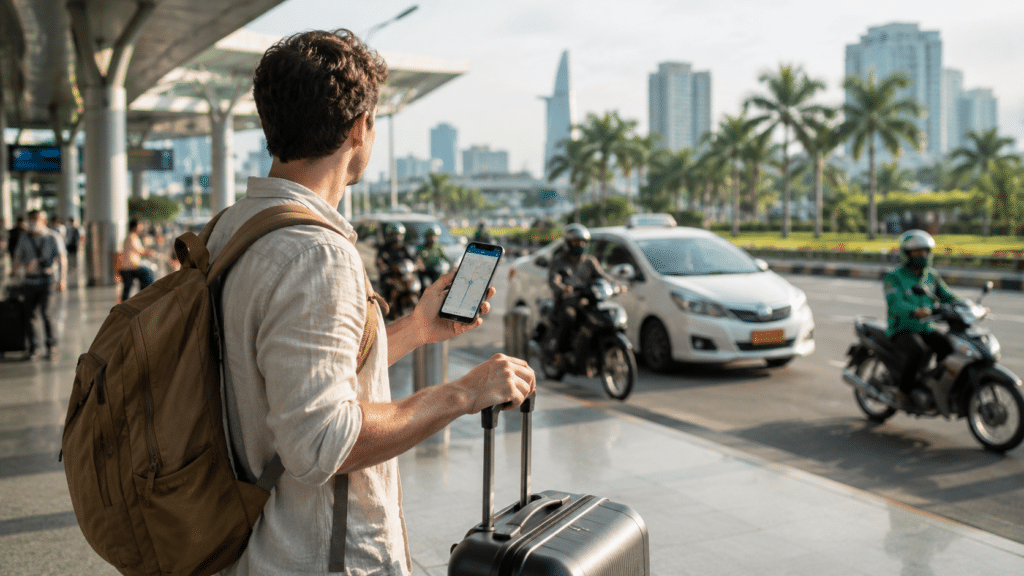
Most travelers in Vietnam need around 1–3GB of mobile data per day for maps, Grab, WhatsApp, browsing, and travel apps.
Light users may be fine with around 1GB per day, while travelers who use TikTok, YouTube, video calls, hotspot sharing, or cloud photo backup should choose a higher-data or unlimited-style plan. Your route also matters: a city-only trip usually needs less planning than a Ha Giang, Sapa, or multi-province journey where mobile coverage becomes more important.
Quick Answer: How Much Data Is Enough for Vietnam?
A safe Vietnam travel data estimate is 1GB per day for light use, 2–3GB per day for normal travel, and more for heavy users.
If you mainly use Google Maps, Grab, WhatsApp, hotel messages, and restaurant searches, 1–3GB per day is usually enough. If you stream videos, upload travel reels, use hotspot, or work online, you should choose a higher-data option from the beginning.
| Traveler Type | Typical Daily Data Need | Best For |
|---|---|---|
| Light user | 500MB–1GB per day | Messaging, maps, light browsing, occasional Grab use |
| Normal tourist | 1–3GB per day | Maps, WhatsApp, Grab, restaurant searches, light social media |
| Heavy user | 3–5GB+ per day | Video calls, TikTok, YouTube, Instagram uploads, hotspot sharing |
| Remote worker | 5GB+ per day or unlimited-style data | Laptop hotspot, online meetings, cloud tools, backup internet |
For a simple rule, multiply your trip length by 2GB if you are a normal tourist. Choose more data if you use video apps, upload many photos, share hotspot, or need mobile data as a backup for work.
For most visitors, a Vietnam travel eSIM is the easiest way to stay connected from arrival without looking for a physical SIM counter after a long flight.
Why Vietnam Travelers Use More Data Than Expected
Travelers often use more mobile data in Vietnam because their phone becomes the main tool for transport, navigation, translation, and local contact.
In Vietnam, mobile data is not only for browsing. You may use it to book Grab rides, contact your hotel, translate menus, check bus or train details, upload travel photos, find cafés, message tour guides, and navigate small streets.
This becomes especially important on arrival. Many travelers need mobile internet right after landing to message their hotel, find airport pickup staff, book a ride, open Google Maps, or contact support if their plan does not connect correctly.
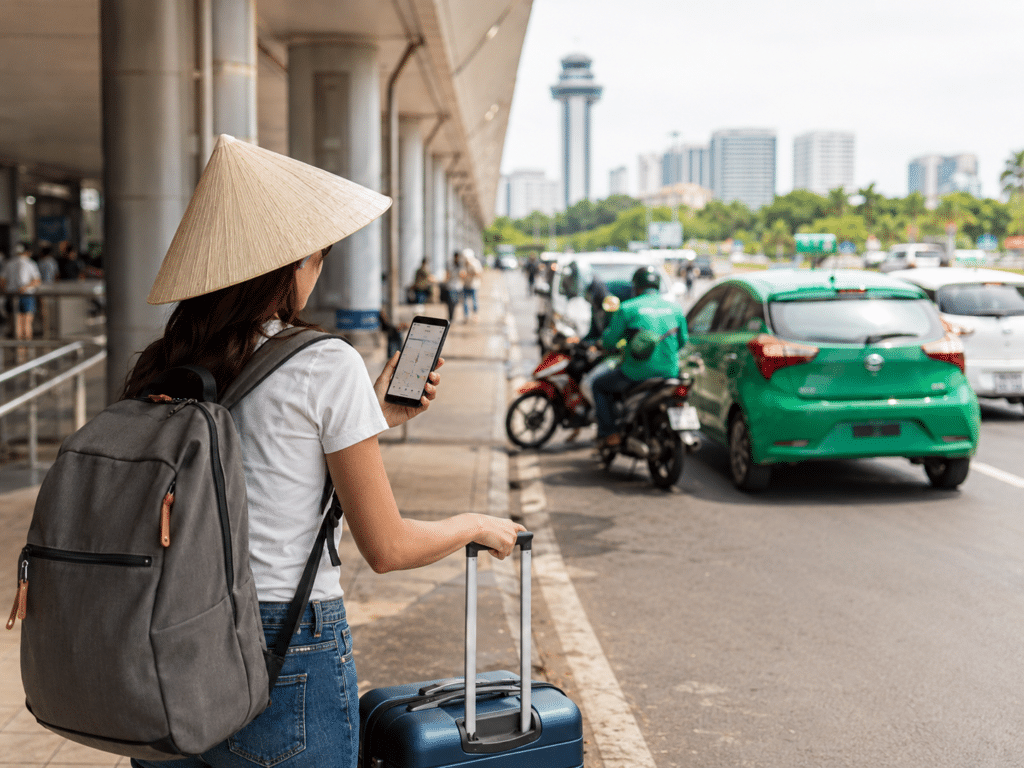
Data usage can also increase when you move between cities. A traveler staying only in Hanoi or Ho Chi Minh City may rely on hotel Wi-Fi more often. A traveler going from Hanoi to Ninh Binh, Ha Long, Sapa, Ha Giang, Da Nang, Hoi An, or the Mekong Delta may need mobile data during transfers, tours, roadside stops, and outdoor activities.
Estimated Data Usage by Travel App
Maps, messaging, and ride-hailing apps usually use modest data, while video streaming, hotspot sharing, and cloud backup use much more.
| Activity | Typical Data Impact | Vietnam Travel Note |
|---|---|---|
| Google Maps / Apple Maps | Low to moderate | Higher if you constantly search routes, traffic, reviews, and nearby places |
| WhatsApp / Messenger / iMessage | Low | Text uses little data, but long calls and media files add up |
| Grab / ride-hailing apps | Low | Very useful at airports, hotels, bus stations, and city pickup points |
| Translation apps | Low to moderate | Useful for menus, taxi instructions, hotel reception, and local shops |
| Instagram / TikTok / Facebook | Moderate to high | Short videos and auto-play feeds can use data quickly |
| YouTube / Netflix / streaming | High | Use hotel Wi-Fi for long videos if your plan is not unlimited-style |
| Video calls | Moderate to high | Short calls are fine, but long daily calls can change your data needs |
| Hotspot to laptop | High | Laptops may sync files, update apps, and load heavier websites |
| Photo/video cloud backup | Very high | Turn off mobile backup unless your plan has enough data |
How Much Data Do You Need for 3, 7, 10, 15, or 30 Days?
A normal Vietnam tourist should estimate around 2GB per day, then increase the plan if they stream, upload videos, or share hotspot.
| Trip Length | Light Use | Normal Use | Heavy Use |
|---|---|---|---|
| 3 days | 3GB total | 6–9GB total | 15GB+ or unlimited-style data |
| 7 days | 7GB total | 14–21GB total | 30GB+ or unlimited-style data |
| 10 days | 10GB total | 20–30GB total | High-data or unlimited-style plan |
| 15 days | 15GB total | 30–45GB total | High-data or unlimited-style plan |
| 30 days | 30GB total | 60–90GB total | High-data or unlimited-style plan |
These figures are estimates for travel planning, not guaranteed usage limits. Your actual data use depends on app settings, video quality, hotspot sharing, background updates, and how often you use Wi-Fi.
Some travelers use less because they rely on hotel Wi-Fi. Others use much more because they record videos, post reels, watch YouTube, or work from a laptop.
Best Data Choice by Vietnam Travel Style
Your Vietnam route is often more important than your trip length when choosing how much mobile data to buy.
City-only trips
City-only travelers usually need 1–2GB per day for maps, ride apps, restaurant searches, and messaging.
If your trip is mainly Hanoi, Ho Chi Minh City, Da Nang, or Hoi An, you can often use hotel or café Wi-Fi for heavier activities. Mobile data is still important when you are outside, taking taxis, walking around, contacting your accommodation, or checking travel details on the go.
Multi-city travel
Multi-city travelers should usually choose at least 2–3GB per day because route planning and transport apps become more important.
Moving between Hanoi, Ninh Binh, Ha Long, Da Nang, Hoi An, Ho Chi Minh City, and the Mekong Delta usually means more time outside hotel Wi-Fi. You may need data while waiting at stations, airports, tour pickup points, ferry terminals, or roadside stops.
Mountain and remote routes
Mountain-route travelers should prioritize both data amount and network coverage, especially for Ha Giang, Sapa, and countryside road trips.
For Ha Giang, Sapa, and rural multi-province travel, a coverage-focused Viettel eSIM is often worth considering because route coverage matters more than data size alone.
Digital nomads and remote workers
Remote workers should consider a high-data or unlimited-style plan if they need hotspot, video meetings, or backup internet.
Hotel Wi-Fi in Vietnam can be good, but it is not always consistent. If you rely on Zoom, Google Meet, cloud documents, or laptop hotspot, avoid choosing the smallest data plan.
Real Vietnam Travel Situations That Use More Data
Real travel situations in Vietnam can increase data usage quickly, even when your daily phone habits seem light at home.
Arrival day at the airport
Arrival day often uses more data because travelers need maps, messaging, ride-hailing, hotel contact, and sometimes eSIM support immediately after landing.
This is especially true at busy airports such as Tan Son Nhat in Ho Chi Minh City or Noi Bai in Hanoi. Even a simple arrival can involve contacting your driver, checking the hotel address, using WhatsApp, and following pickup instructions.
Traveling with friends or family
Group travelers may use more data when one person shares hotspot or helps others navigate, translate, and book transport.
If one traveler’s phone has no signal, no roaming, or no local data, another traveler often becomes the backup connection. This can make a small data plan run out faster than expected.
Photo and video-heavy trips
Photo and video-heavy travelers should choose more data because cloud backup and social media uploads can consume several GB quickly.
Vietnam is a very visual destination. Ha Long Bay, Hoi An, Ninh Binh, Ha Giang, Sapa, and street food experiences often lead travelers to upload more photos and short videos than usual.
Using your phone as a backup for work
Travelers who need work backup internet should choose more data because laptop hotspot can use much more data than phone-only browsing.
A laptop may sync files, load large websites, update software, and keep background apps running. If you need reliable backup internet for work, a small tourist data plan may feel too limited.
When Unlimited-Style Data Makes Sense in Vietnam
Unlimited-style data makes sense in Vietnam when you do not want to monitor usage or expect video, hotspot, or heavy social media activity.
This type of plan is useful for travelers who watch YouTube, use TikTok, upload Instagram Reels, take video calls, share hotspot, or travel in a group. It can also reduce stress because you do not need to check your balance every day.
However, unlimited-style data does not mean perfect maximum speed everywhere at all times. Mobile speed can depend on your location, signal strength, device bands, network congestion, and plan conditions. A trustworthy provider should explain plan limits clearly instead of promising perfect speed across all of Vietnam.
Do You Need a Vietnam eSIM With a Phone Number?
You only need a Vietnam eSIM with a phone number if you want local calls, incoming calls, SMS, or Zalo verification.
Many Vietnam travel eSIMs are data-only. That means they provide mobile internet but do not include a Vietnamese phone number, calls, SMS, or Zalo SMS verification. This is fine if you only need maps, Grab, WhatsApp, browsing, hotel contact through apps, and social media.
If you need a local number for Zalo registration, incoming calls, SMS, or local contact, choose a Vietnam eSIM with phone number instead of a data-only plan. Banking OTP support should not be assumed because each bank has its own verification rules.
How to Reduce Mobile Data Usage in Vietnam
The easiest way to save mobile data in Vietnam is to download maps, disable auto-play, and keep cloud backup on Wi-Fi only.
- Download offline maps before long routes. This helps reduce data usage and is useful when traveling outside major cities.
- Turn off video auto-play. TikTok, Instagram, Facebook, and YouTube can use data quickly.
- Set photo backup to Wi-Fi only. Travel photos and videos can consume several GB without warning.
- Avoid laptop hotspot unless needed. Laptops often use more data than phones because of background updates and cloud sync.
- Use hotel Wi-Fi for streaming. Save mobile data for maps, ride apps, translation, and communication outside.
- Check your phone’s data usage screen. iPhone and Android both show which apps are using the most mobile data.
Common Mistakes Travelers Make
The most common data mistake in Vietnam is buying too little data and then using video, hotspot, or cloud backup without noticing.
Choosing the cheapest plan without checking travel style
A very small plan may work for light users, but it can feel restrictive if you depend on maps, Grab, social media, or video calls every day.
Assuming hotel Wi-Fi will cover everything
Hotel Wi-Fi does not help when you are at the airport, in a taxi, walking around a new city, joining a tour, or riding between provinces.
Using hotspot without realizing it
Hotspot sharing can use data much faster than normal phone use, especially when a laptop starts syncing files or updating apps.
Buying a data-only eSIM when they need Zalo SMS
A data-only eSIM cannot receive Zalo SMS verification. Travelers who need Zalo registration should choose a plan that clearly includes a Vietnamese phone number.
Forgetting to check whether the phone supports eSIM
Travelers should check that their phone supports eSIM and is carrier-unlocked before buying a Vietnam eSIM.
If your phone is carrier-locked, region-locked, or does not support eSIM, the plan may not install correctly. In that case, a physical SIM or hotel SIM delivery may be a better fallback.
GoVnSIM Recommendation
GoVnSIM usually recommends choosing mobile data based on your route, phone habits, and whether you need only data or a Vietnamese number.
For normal travel in major cities, 1–3GB per day is usually enough. For Ha Giang, Sapa, rural routes, and multi-province travel, coverage becomes more important. For video, hotspot, remote work, and heavy social media, a high-data or unlimited-style plan is safer.
GoVnSIM provides Vietnam eSIM plans for international travelers, with setup guidance and support if you need help before or after arrival. Most travelers can install their eSIM before departure using Wi-Fi, then use mobile data after arriving in Vietnam coverage.
Need Help Choosing the Right Vietnam eSIM Data Plan?
GoVnSIM can help you choose a Vietnam eSIM based on your trip length, route, phone model, and data usage habits.
If you only need maps, Grab, WhatsApp, and browsing, a normal data plan may be enough. If you travel to mountain areas, use hotspot, upload videos, or need a local number, you should choose more carefully before purchase.
You can start by comparing a Vietnam eSIM for your trip, or contact GoVnSIM if you want help choosing based on your itinerary, phone model, and whether you need a data-only plan or a Vietnamese number.
FAQ
Is 1GB per day enough for Vietnam?
1GB per day is enough for light Vietnam travel if you mainly use maps, messaging, Grab, and basic browsing.
It may not be enough if you watch videos, upload many photos, use hotspot, or take long video calls.
Is 3GB per day enough for Vietnam?
3GB per day is enough for most tourists in Vietnam who use maps, messaging, ride apps, social media, and occasional video.
It is a practical middle option for travelers who do not want to constantly check their data balance.
Do I need unlimited data in Vietnam?
You need unlimited-style data in Vietnam if you stream videos, share hotspot, work online, or use social media heavily.
Light users can often manage with a fixed data plan, but heavy users usually feel more comfortable with a higher-data option.
Does Google Maps use a lot of data in Vietnam?
Google Maps usually does not use much data compared with video streaming, but heavy route searching can still add up.
Downloading offline maps before long routes can reduce mobile data usage and help when signal is weaker.
Does a Vietnam eSIM include phone calls and SMS?
A data-only Vietnam eSIM does not include phone calls, SMS, or a Vietnamese phone number.
If you need calls, incoming calls, SMS, or Zalo verification, choose a Vietnam eSIM plan that clearly includes a local number.
Can I use my Vietnam eSIM as a hotspot?
You can use hotspot only if your device and selected eSIM plan allow tethering.
Hotspot can use data quickly, especially with laptops, so travelers who need tethering should choose more data than normal phone-only users.
What is the best data amount for a 7-day Vietnam trip?
For a 7-day Vietnam trip, 14–21GB total is a safe estimate for normal tourist use.
Light users may need less, while heavy social media users, remote workers, and hotspot users should consider a higher-data or unlimited-style plan.
What is the best data amount for a 15-day Vietnam trip?
For a 15-day Vietnam trip, 30–45GB total is a safe estimate for normal tourist use.
Choose more if your trip includes video uploads, hotspot sharing, remote work, or long travel days outside hotel Wi-Fi.
Should I choose more data for Ha Giang or Sapa?
For Ha Giang or Sapa, you should consider both data amount and network coverage because mountain routes can be more demanding.
A coverage-focused option is usually more useful for remote routes than choosing only the cheapest data package.